Tetra Test Strip Chart

Professional aquarium testing with Tetra brand test strips and real-time strip chart visualization
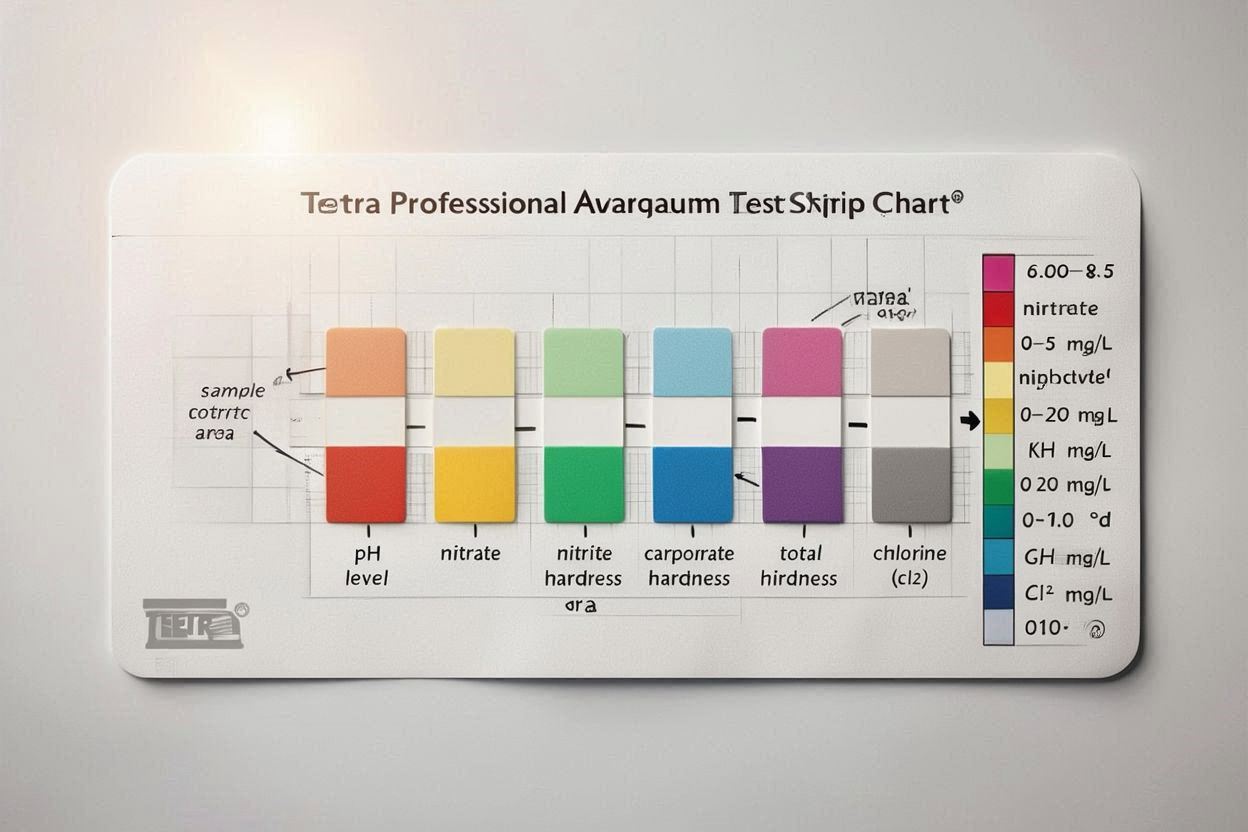
Tetra Test Strip Chart demo

Tetra Test Strip Chart Overview

Comprehensive Tetra Test Strip Chart monitoring for professional aquarium testing with Tetra brand accuracy

Tetra Test Strip Chart Purpose & Function

Tetra Test Strip Charts are professional-grade tools for monitoring aquarium water quality using Tetra brand test strips. They provide continuous visualization of critical water parameters with Tetra's renowned accuracy and reliability for optimal fish health.

  • Professional-grade accuracy
  • Easy-to-read color coding
  • Comprehensive parameter coverage
  • Reliable Tetra brand reputation

Tetra Test Strip Chart Key Features

Advanced strip chart technology provides comprehensive monitoring capabilities with Tetra's professional-grade accuracy and reliability for aquarium management.

  • Multi-parameter monitoring
  • Color-coded parameter tracking
  • Alert thresholds for critical levels
  • Historical data analysis
  • Automated trend detection

Tetra Test Strip Chart Parameters

Critical Tetra Test Strip Chart parameters for comprehensive professional aquarium testing

pH Level

Normal Range: 6.0 - 8.0
What it means: pH measures water acidity/alkalinity. Proper pH ensures fish health and prevents stress.
Impact: Low pH causes fish stress; high pH affects fish gills and overall health.

Total Hardness

Normal Range: 0 - 300°dH
What it means: Concentration of calcium and magnesium minerals in water.
Impact: Affects fish health, breeding success, and water chemistry stability.

Carbonate Hardness

Normal Range: 0 - 20°dH
What it means: Water's ability to resist pH changes, acts as pH buffer.
Impact: Low carbonate hardness causes pH swings; high levels make pH adjustment difficult.

Nitrite

Normal Range: 0 - 10 mg/l
What it means: Intermediate product in the nitrogen cycle, converted from ammonia.
Impact: Highly toxic to fish, even small amounts can cause fish death.

Nitrate

Normal Range: 0 - 250 mg/l
What it means: Final product in the nitrogen cycle, less toxic than ammonia and nitrite.
Impact: High levels cause fish stress and algae growth; regular water changes needed.

Chlorine (Cl2)

Normal Range: 0 mg/l
What it means: Toxic chemical used in water treatment that is harmful to fish and beneficial bacteria.
Impact: Any detectable chlorine is dangerous to fish and can kill beneficial bacteria in the aquarium.

Tetra Test Strip Chart Visual Examples & Guide

Real-time Tetra Test Strip Chart examples and comprehensive interpretation guide
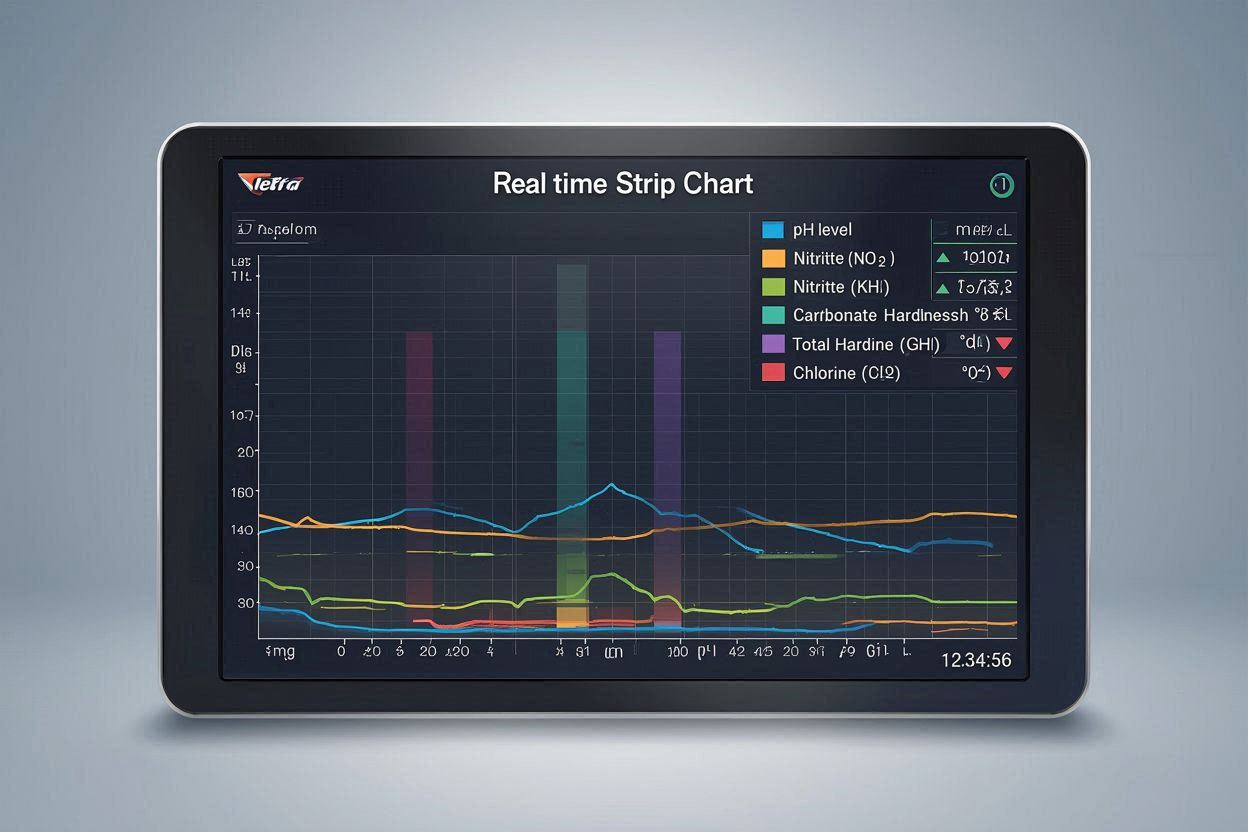
Tetra Test Strip Chart example

How to Read Tetra Test Strip Chart Results - Complete Guide

Healthy Aquarium

All parameters stay within safe ranges. pH stable, hardness appropriate, nitrite at 0, nitrate below 50 mg/l.

Warning Signs

Parameters approaching dangerous levels. Immediate attention required to prevent fish stress.

Critical Levels

Parameters outside safe ranges. Immediate corrective action required to prevent fish death.

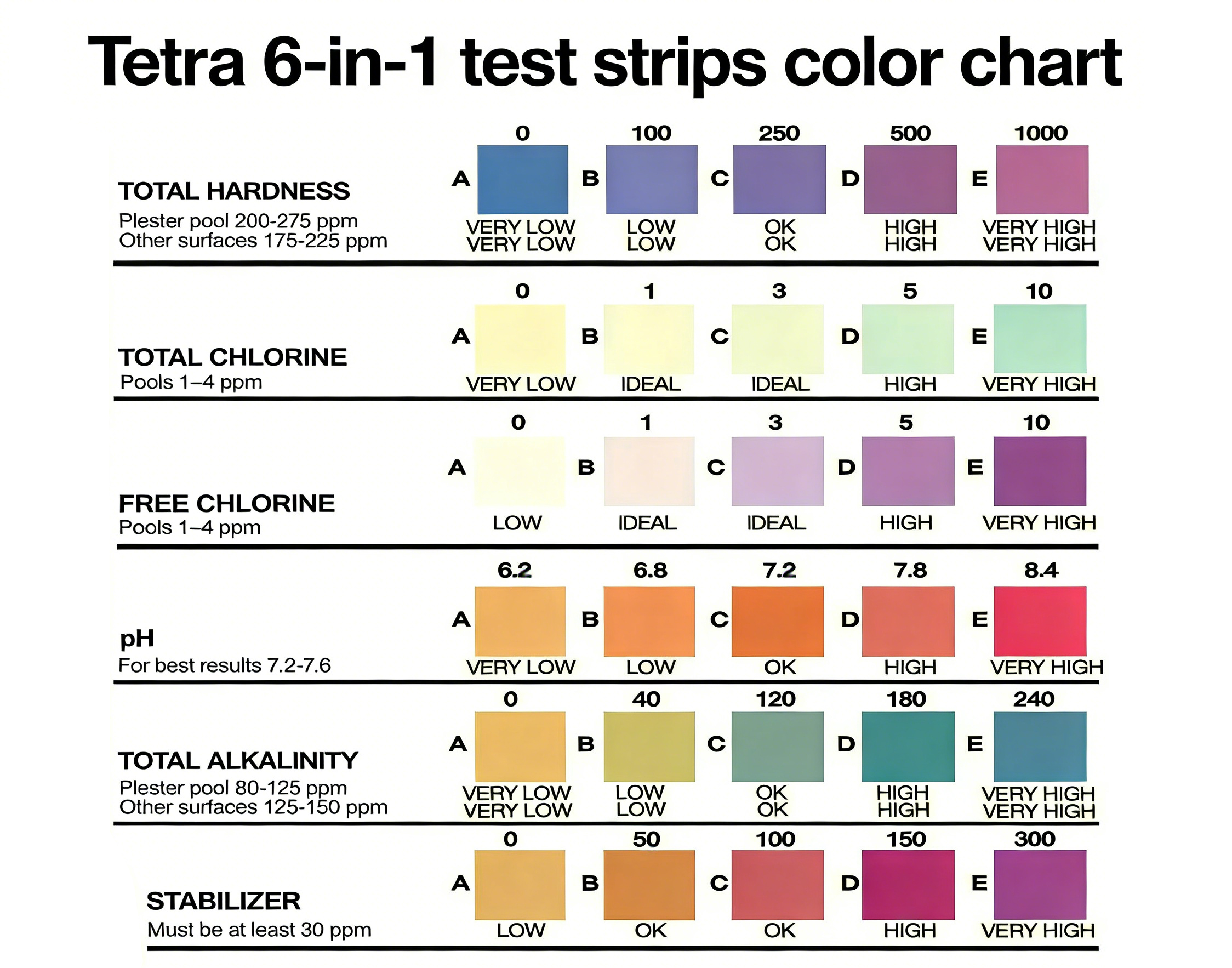
Tetra 6-in-1 Test Strips Color Chart Free Download PDF


Tetra 6-in-1 Test Strips Color Chart Free Download

You can Open PDF OR Free Download PDF

Traditional Tetra Test Strips vs Tetra Test Strip Chart

Understanding traditional Tetra test strips and how they compare to modern Tetra Test Strip Charts

Traditional Tetra Test Strips - How to Read

Tetra Color Chart Reference

pH
6.0 - 8.0
Total Hardness
0 - 300°dH
Carbonate Hardness
0 - 20°dH
Nitrite
0 - 10 mg/l
Nitrate
0 - 250 mg/l
Chlorine
0 - 3 mg/l

How to Read Traditional Tetra Test Strips:

1
Dip the Tetra test strip into aquarium water for 2 seconds
2
Remove immediately and shake off excess water
3
Hold strip level and compare colors within 15 seconds
4
Match each pad color to the corresponding Tetra chart color
5
Read the value range for each parameter

Traditional Tetra Test Strip Parameters Explained

pH Level

Normal Range: 6.0 - 8.0
What it measures: Water acidity/alkalinity balance for fish health
Why it matters: Critical for fish health and prevents stress

Total Hardness

Normal Range: 0 - 300°dH
What it measures: Concentration of calcium and magnesium minerals
Why it matters: Affects fish health, breeding success, and water chemistry

Carbonate Hardness

Normal Range: 0 - 20°dH
What it measures: Water's ability to resist pH changes
Why it matters: Acts as pH buffer to maintain stability

Nitrite

Normal Range: 0 - 10 mg/l
What it measures: Intermediate product in nitrogen cycle
Why it matters: Highly toxic to fish, even small amounts dangerous

Nitrate

Normal Range: 0 - 250 mg/l
What it measures: Final product in nitrogen cycle
Why it matters: High levels cause fish stress and algae growth

Chlorine (Cl2)

Normal Range: 0 mg/l
What it measures: Toxic chemical used in water treatment
Why it matters: Any detectable chlorine is dangerous to fish and beneficial bacteria

Traditional Tetra Test Strips vs Tetra Test Strip Chart Comparison

Traditional Tetra Test Strips

Advantages:
  • ✓ Professional Tetra brand accuracy
  • ✓ Easy-to-read color coding
  • ✓ No power or technology required
  • ✓ Portable and lightweight
  • ✓ Cost-effective for home aquariums
Limitations:
  • ✗ Manual testing only
  • ✗ No historical data tracking
  • ✗ Subjective color interpretation
  • ✗ Limited accuracy
  • ✗ No automated alerts

Tetra Test Strip Chart

Advantages:
  • ✓ Continuous real-time monitoring
  • ✓ Historical data and trends
  • ✓ Automated alerts and notifications
  • ✓ Precise digital readings
  • ✓ Professional-grade accuracy
  • ✓ Remote monitoring capabilities
Considerations:
  • ✗ Requires power and technology
  • ✗ Higher initial investment
  • ✗ More complex setup
  • ✗ Requires maintenance

When to Use Each Method:

Use Traditional Tetra Test Strips When:
  • • Home aquarium maintenance
  • • Quick spot checks
  • • Portable testing needs
  • • Budget-conscious applications
  • • Backup testing method
Use Tetra Test Strip Chart When:
  • • Professional aquarium management
  • • Commercial fish facilities
  • • Continuous monitoring required
  • • Historical data analysis needed
  • • Automated alert systems

Tetra Test Strip Chart Parameter Troubleshooting Guide

Complete Tetra Test Strip Chart troubleshooting when water quality parameters are out of range

pH Too Low (< 6.0)

Symptoms: Fish stress, poor health, acidic water conditions
Solution:
  • Add pH buffer or baking soda to raise pH
  • Check for decaying organic matter
  • Increase aeration and water circulation
  • Perform partial water changes

pH Too High (> 8.0)

Symptoms: Fish stress, poor health, alkaline water conditions
Solution:
  • Add pH down or driftwood to lower pH
  • Check for excessive limestone or shells
  • Increase CO2 levels if using CO2 injection
  • Perform partial water changes

Total Hardness Too Low (< 50°dH)

Symptoms: Fish stress, poor breeding, unstable water chemistry
Solution:
  • Add calcium and magnesium supplements
  • Use harder water for water changes
  • Add limestone or coral to substrate
  • Check water source hardness

Nitrite Detected (> 0 mg/l)

Symptoms: Fish gasping, brown blood, fish death, poor water quality
Solution:
  • Immediate large water change (50-75%)
  • Add nitrite neutralizer
  • Check biological filter function
  • Reduce feeding and fish load

Chlorine Detected (> 0 mg/l)

Symptoms: Fish gasping, red gills, fish death, beneficial bacteria die-off
Solution:
  • Immediate large water change (50-75%)
  • Add chlorine neutralizer or water conditioner
  • Let water sit for 24-48 hours to allow chlorine to evaporate
  • Use dechlorinated water for future water changes

Tetra Test Strip Chart Generation Tools

Professional tools and software for creating advanced Tetra Test Strip Charts

Python

Create dynamic Tetra test strip charts using matplotlib, plotly, or bokeh libraries.

Real-time data Custom styling Export options

JavaScript

Interactive web-based strip charts using Chart.js, D3.js, or custom Canvas implementations.

Web integration Interactive controls Responsive design

LabVIEW

Industrial-grade strip chart creation for automated aquarium monitoring systems.

Industrial control Data logging Alarm systems

Excel

Simple strip chart creation using Excel's charting capabilities for basic aquarium monitoring.

Easy setup Data analysis Report generation

AI Tetra Test Tool

AI-powered Tetra test strip chart systems utilize machine learning and artificial intelligence to automatically analyze aquarium water quality data, predict trends, detect anomalies, and provide intelligent recommendations for optimal aquarium health management.

AI Analysis Predictive Analytics Auto Recommendations Smart Alerts

Currently Available AI Tetra Test Tools:

  • TetraAI Smart Monitor: Advanced AI-powered Tetra test strip chart analysis with predictive water quality monitoring
  • AquaTetra AI Analytics: Machine learning-based Tetra parameter analysis and optimization
  • TetraNeural System: Deep learning platform for Tetra test strip chart prediction and management
  • SmartTetra AI: Intelligent Tetra test monitoring with automated parameter recommendations
  • TetraIntelligence Platform: Cloud-based AI system for comprehensive Tetra test strip chart analysis
  • NeuralTetra Monitor: AI-driven Tetra test monitoring with species-specific recommendations
  • TetraPredict AI: Predictive analytics system for proactive aquarium maintenance using Tetra test data
  • AquaSense Tetra AI: Intelligent Tetra test strip chart interpretation with automated alerts

How to Use Tetra Test Strip Charts

Step-by-step Tetra Test Strip Chart usage guide for effective professional aquarium testing

1

Tetra Test Strip Chart Initial Setup

Configure your strip chart system with appropriate sensors and data collection intervals.

  • Install pH, hardness, nitrite, and nitrate sensors
  • Set data collection frequency (every 15-30 minutes)
  • Configure alert thresholds for each parameter
  • Calibrate sensors according to manufacturer instructions
2

Tetra Test Strip Chart Daily Monitoring

Regularly check strip chart readings and respond to any parameter deviations.

  • Review chart trends every morning
  • Look for sudden changes or gradual drift
  • Check for any alert notifications
  • Record observations in maintenance log
3

Tetra Test Strip Chart Weekly Analysis

Analyze weekly trends to identify patterns and optimize aquarium maintenance.

  • Review 7-day trend analysis
  • Identify recurring issues or patterns
  • Adjust maintenance schedules if needed
  • Plan preventive maintenance actions
4

Tetra Test Strip Chart Maintenance Actions

Take corrective action based on strip chart readings and parameter analysis.
  • Perform water changes as indicated by parameter readings
  • Adjust filtration and aeration settings
  • Clean or replace equipment as needed
  • Document all maintenance actions