API 5 in 1 Test Strips Diagnostic Chart

pH, KH, GH, Nitrite, Nitrate with real-time strip chart visualization for aquariums
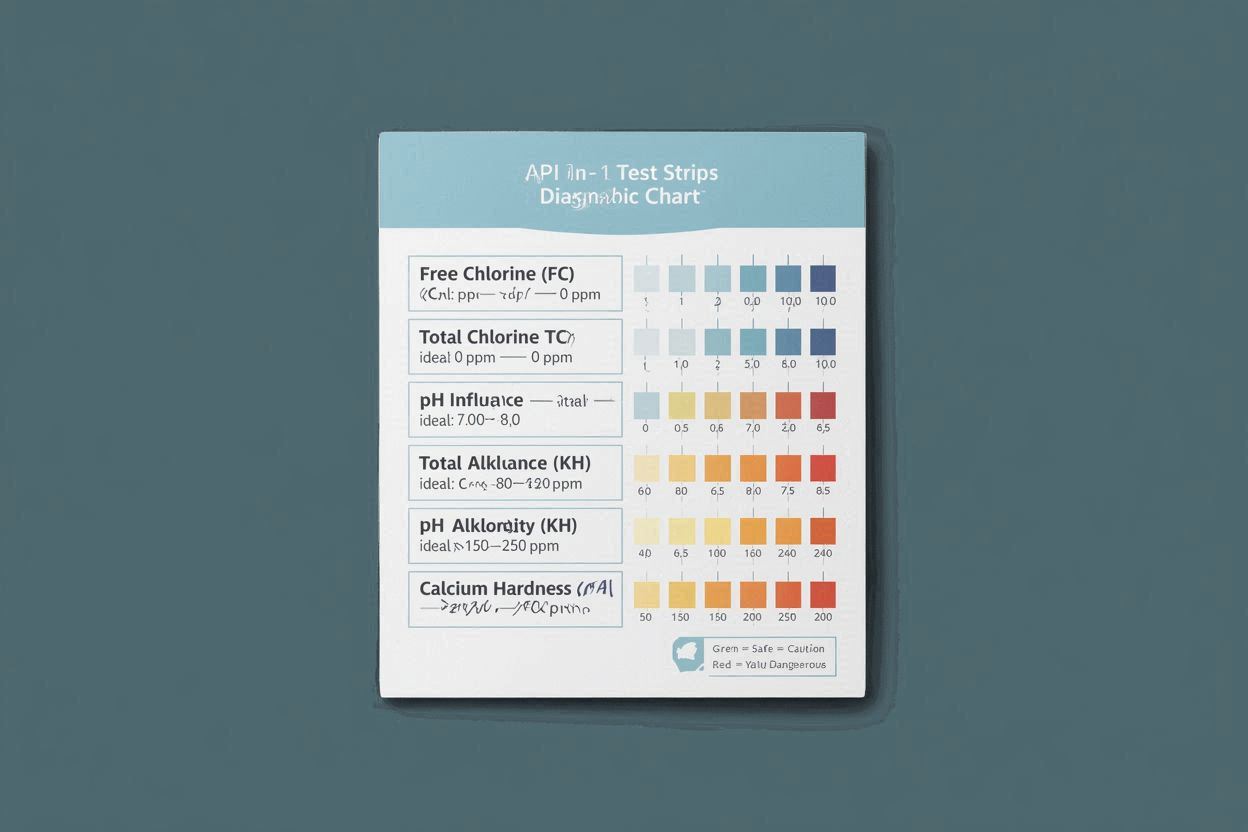
API 5 in 1 Test Strips demo

API 5 in 1 Test Strips Overview

Track five essential aquarium parameters to maintain fish health and biological stability

Why These Five

pH, KH, and GH define the water chemistry foundation; nitrite and nitrate reflect biological filtration performance. Together they indicate system health and needed interventions.

  • Foundation chemistry (pH/KH/GH)
  • Nitrogen cycle status (NO2/NO3)
  • Early warning indicators
  • Actionable maintenance guidance

Benefits of Digital Strip Charts

Paper charts show a snapshot; digital charts reveal trends, seasonal patterns, and post-maintenance responses for better decisions.

  • Trend visibility
  • Threshold alerts
  • Maintenance verification
  • Historical records

API 5 in 1 Parameters & Ranges

Typical freshwater targets; adjust for species-specific needs

pH

Range: 6.5 - 7.8 (species dependent)
Meaning: Acid/alkaline balance impacting fish stress and biofilter.
Impact: Sudden swings are harmful; keep stable.

KH (Carbonate Hardness)

Range: 3 - 8 dKH
Meaning: pH buffering capacity stabilizing acidity.
Impact: Low KH leads to pH crashes; raise with baking soda.

GH (General Hardness)

Range: 4 - 12 dGH
Meaning: Dissolved calcium/magnesium affecting osmoregulation.
Impact: Match GH to species (livebearers like higher GH).

Nitrite (NO2-)

Range: 0.00 ppm (always)
Meaning: Toxic intermediate of nitrogen cycle.
Impact: Any detection is an emergency; water change and detox.

Nitrate (NO3-)

Range: < 40 ppm (prefer < 20 ppm)
Meaning: End of nitrogen cycle; high levels stress fish and fuel algae.
Impact: Control via water changes, feeding, plants.

API 5 in 1 Visual Examples & Guide

Real-time example with pH, KH, GH, Nitrite, and Nitrate visualization

API 5 in 1 Test Strips example

How to Read API Strip Results

Stable System

pH steady, KH 3-8 dKH, GH species-appropriate, NO2 0, NO3 < 20-40 ppm.

Cycling Issues

Nitrite detected—act immediately; reduce feeding, water change, add bacteria.

High Nitrate

Perform larger/frequent water changes; increase plants; review stocking.

API Paper Strip Chart vs Digital Strip Chart

Reading paper color charts and the advantages of digital trends

Paper Chart Reading - Steps

API 5-in-1 Color Reference

pH
6.0 - 8.5
KH
0 - 20 dKH
GH
0 - 30 dGH
Nitrite
0 - 10 ppm
Nitrate
0 - 250 ppm

Steps:

1
Dip for 1 second; hold level and wait per label.
2
Compare each pad to color chart promptly.
3
Record values; track over time.
4
Adjust with water changes, buffers, remineralizers.

Parameter Insights

pH

Range: 6.5 - 7.8
Role: Fish stress and biofilter efficiency.
Why: Keep stable; avoid rapid swings.

KH

Range: 3 - 8 dKH
Role: pH buffer capacity.
Why: Prevents pH crash.

GH

Range: 4 - 12 dGH
Role: Minerals for osmoregulation.
Why: Match species needs.

Nitrite

Range: 0.00 ppm
Role: Toxic; emergency if detected.
Why: Indicates biofilter failure or overload.

Nitrate

Range: < 40 ppm
Role: End product; stresses fish at high levels.
Why: Controls algae and long-term health.

API Strip Troubleshooting

Common issues and actions for stable aquariums

Nitrite Detected

Symptoms: Fish gasping, brown blood.
Solution:
  • Immediate 50% water change
  • Add nitrifying bacteria
  • Reduce feeding
  • Increase aeration

High Nitrate

Symptoms: Algae, slow growth, stress.
Solution:
  • Frequent partial water changes
  • Add fast-growing plants
  • Reduce stocking/feeding
  • Improve filtration

pH Instability

Symptoms: Fish stress, filter inefficiency.
Solution:
  • Raise KH with buffers
  • Avoid sudden changes
  • Stabilize with crushed coral as needed
  • Match source water

API Chart Generation Tools

Create aquarium strip charts with professional tools

Python

Matplotlib/plotly aquarium dashboards with alerting.

Real-timeAlertsReports

JavaScript

Canvas/D3 interactive aquarium monitoring on the web.

WebInteractiveResponsive

LabVIEW

SCADA-like logging and alarm systems for larger facilities.

SCADALoggingAlarms

Excel

Simple logs with conditional formatting and charts for hobbyists.

EasyAnalysisReports

API 5 in 1 Test Strips Diagnostic Chart Tools

AI-powered tools for API 5 in 1 Test Strips Diagnostic Chart analysis and optimization.

AI Analysis Predictive Analytics Auto Recommendations

Currently Available AI Tools for API 5 in 1 Test Strips Diagnostic Chart:

  • API5AI Smart Monitor: Advanced AI-powered API 5 in 1 test strips diagnostic chart analysis with predictive aquarium monitoring
  • AquariumAI Analytics: Machine learning-based API 5 in 1 parameter analysis and optimization
  • API5Neural System: Deep learning platform for API 5 in 1 test strips diagnostic chart prediction and management
  • SmartAPI5 AI: Intelligent API 5 in 1 test monitoring with automated parameter recommendations
  • API5Intelligence Platform: Cloud-based AI system for comprehensive API 5 in 1 test strips diagnostic chart analysis
  • NeuralAPI5 Monitor: AI-driven API 5 in 1 test monitoring with species-specific recommendations
  • API5Predict AI: Predictive analytics system for proactive aquarium maintenance using API 5 in 1 test strips diagnostic chart data
  • AquaSense API5 AI: Intelligent API 5 in 1 test strips diagnostic chart interpretation with automated alerts
  • HydroAPI5 AI Analytics: AI-powered API 5 in 1 analysis with real-time diagnostic chart monitoring
  • PureAPI5 AI System: Comprehensive AI platform for API 5 in 1 test strips diagnostic chart analysis and optimization

Using API 5 in 1 Strips & Charts

Accurate testing workflow and maintenance loop

1

Sample & Test

Test at the same time daily; follow label timing exactly.

  • Dip for 1 second; hold level
  • Read pads in order specified
  • Avoid wet fingers contacting pads
  • Log results immediately
2

Interpret & Decide

Use color chart with digital trends.

  • Confirm NO2 is 0
  • Keep NO3 low via changes
  • Stabilize pH via KH
  • Match GH to species
3

Act & Verify

Adjust, then verify after circulation period.

  • Water change and buffers
  • Bacteria supplements if cycling
  • Retest after 2-12 hours
  • Record outcomes
4

Maintain & Review

Build stable routines and review weekly history.

  • Regular partial changes
  • Prune/add plants
  • Adjust feeding/stocking
  • Check filter maintenance