Aquarium Test Strip Chart

Professional aquarium water quality monitoring with real-time strip chart visualization for optimal fish health
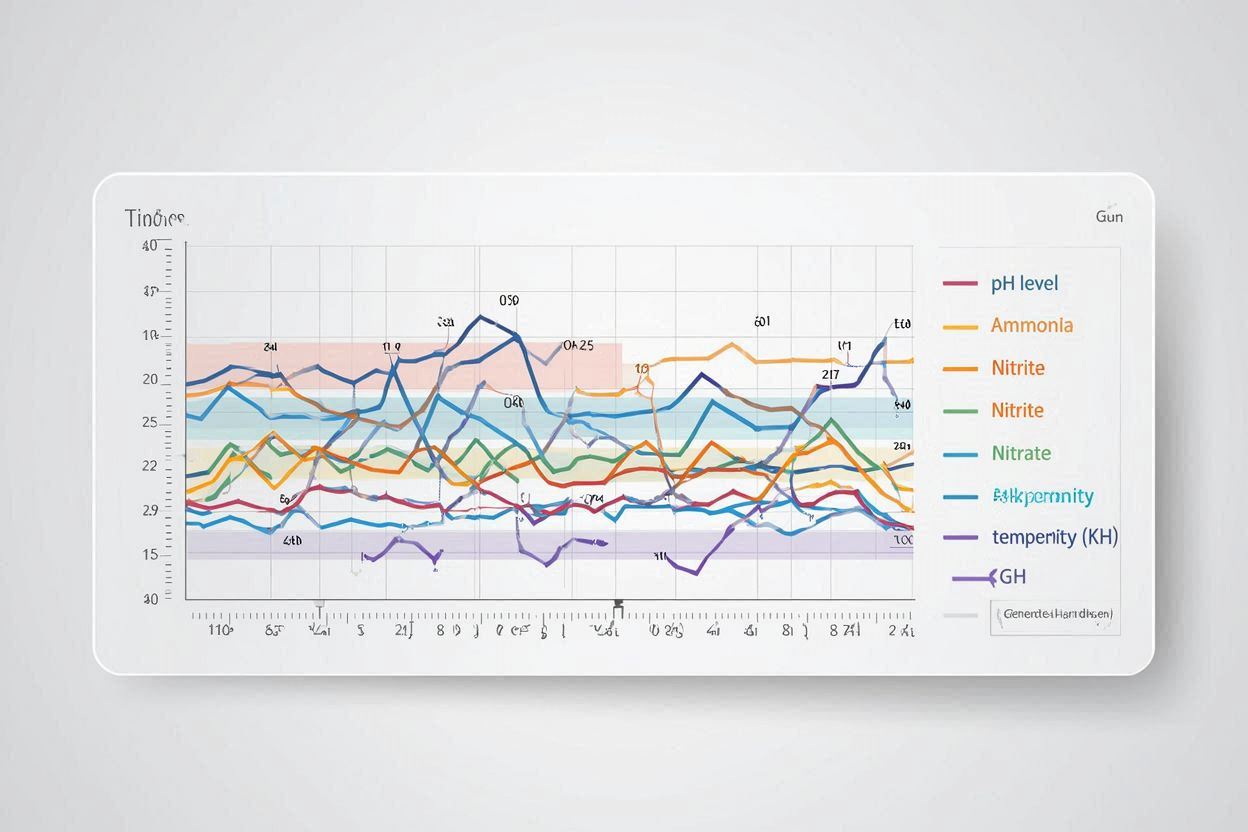
Aquarium Test Strip Chart demo

Aquarium Test Strip Chart Overview

Comprehensive Aquarium Test Strip Chart monitoring for optimal fish health and water quality

Aquarium Test Strip Chart Purpose & Function

Aquarium Test Strip Charts are essential tools for monitoring aquarium water quality in real-time. They provide continuous visualization of critical water parameters to ensure optimal fish health, prevent disease, and maintain a balanced aquatic ecosystem.

  • Real-time water quality monitoring
  • Prevents fish stress and disease
  • Maintains optimal water chemistry
  • Ensures fish breeding success

Aquarium Test Strip Chart Key Features

Advanced strip chart technology provides comprehensive monitoring capabilities with professional-grade accuracy and reliability for aquarium management.

  • Multi-parameter monitoring
  • Color-coded parameter tracking
  • Alert thresholds for critical levels
  • Historical data analysis
  • Automated trend detection

Aquarium Test Strip Chart Parameters

Critical Aquarium Test Strip Chart parameters for comprehensive fish health monitoring

pH Level

Normal Range: 6.5 - 7.5
What it means: pH measures water acidity/alkalinity. Proper pH ensures fish health and prevents stress.
Impact: Low pH causes fish stress; high pH affects fish gills and overall health.

Ammonia

Normal Range: 0 ppm
What it means: Toxic waste product from fish respiration and waste decomposition.
Impact: Any detectable ammonia is dangerous to fish and indicates poor water quality.

Nitrite

Normal Range: 0 ppm
What it means: Intermediate product in the nitrogen cycle, converted from ammonia.
Impact: Highly toxic to fish, even small amounts can cause fish death.

Nitrate

Normal Range: < 40 ppm
What it means: Final product in the nitrogen cycle, less toxic than ammonia and nitrite.
Impact: High levels cause fish stress and algae growth; regular water changes needed.

Temperature

Normal Range: 72-82°F (22-28°C)
What it means: Water temperature affects fish metabolism, oxygen levels, and overall health.
Impact: Temperature fluctuations cause fish stress; stable temperature is crucial for fish health.

Alkalinity (KH)

Normal Range: 4-8 dKH
What it means: Carbonate hardness buffers pH changes and provides stability to water chemistry.
Impact: Low KH causes pH crashes; high KH makes pH adjustments difficult.

General Hardness (GH)

Normal Range: 4-8 dGH
What it means: Total dissolved minerals (calcium and magnesium) essential for fish health and breeding.
Impact: Low GH affects fish osmoregulation; high GH can cause mineral buildup.

Aquarium Test Strip Chart Visual Examples & Guide

Real-time Aquarium Test Strip Chart examples and comprehensive interpretation guide
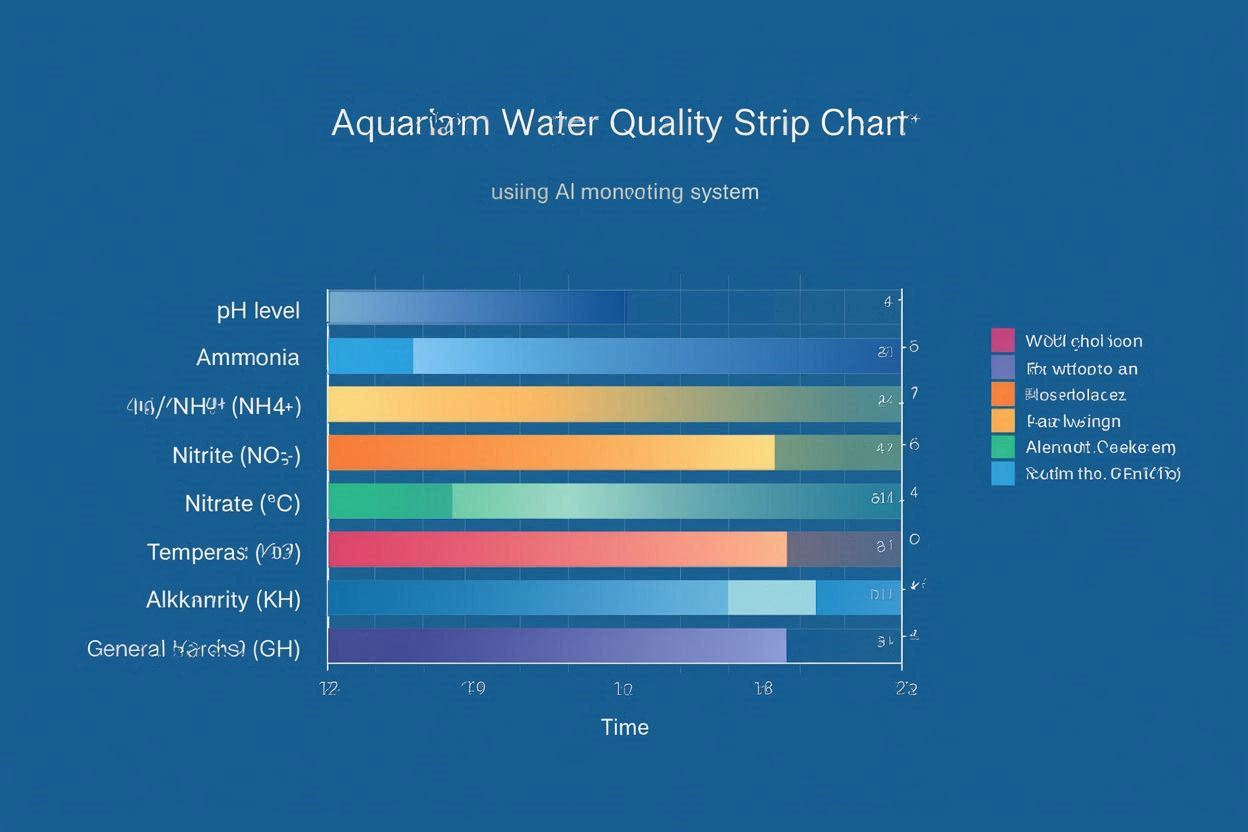
Aquarium Test Strip Chart example

How to Read Aquarium Test Strip Chart Results - Complete Guide

Maintaining precise water chemistry is essential for aquarium health. This guide details optimal parameters for pH, hardness, and nitrogen compounds across different aquatic environments.

pH Balance Testing & Adjustment

Different aquatic species require specific pH ranges to thrive. Below are recommendations based on fish origin and type:

  • Community Tropical Tanks: Most mixed tropical fish flourish at pH 6.8-7.2
  • Goldfish-Specific Aquariums: Prefer slightly alkaline water at pH 7.5
  • Amazonian Species: Angelfish, neon tetras, and other soft water fish thrive at pH 6.5-6.8
  • Livebearer Tanks: Mollies and swordtails perform best at pH 7.2-7.5
  • African Cichlid Habitats: Require alkaline conditions of pH 8.2 or higher
  • Marine Environments: Saltwater fish and invertebrates need pH 8.2-8.4

pH Adjustment Solutions: Use API® PROPER pH® formulations to maintain stable conditions. For freshwater, choose 6.5, 7.0 or 7.5 based on your target. African cichlid tanks require API PROPER pH 8.2 carbonate buffer. Marine systems benefit from API PROPER pH 8.2 for reef and saltwater aquariums.

General Hardness (GH) Parameter Guide

General Hardness measures calcium and magnesium ions, crucial for biological functions. Match GH levels to your aquarium inhabitants:

ppm (mg/L) °dGH Recommended Species & Environments
30 1.7° Discus, arowanas, neon/cardinal tetras, elephant nose fish, freshwater plants
60 3.4° Most tropical community fish including angelfish, tetras, botia, planted tanks
120 6.7° Livebearers (swordtails, guppies, mollies), various cichlids, goldfish
180 10.0° African cichlids, fancy goldfish varieties requiring mineral-rich water

Carbonate Hardness (KH) Testing Standards

Carbonate Hardness determines water's buffering capacity against pH fluctuations. Maintain appropriate KH levels for system stability:

ppm (mg/L) °dKH Ideal For These Aquatic Systems
40 2.2° Blackwater species: discus, arowanas, elephant nose, neon/cardinal tetras, planted tanks
80 4.5° Standard tropical community aquariums with angelfish, tetras, botia, live plants
120 6.7° Hardwater tropical fish including livebearers, cichlids, goldfish, brackish setups
180 10.0° African cichlids, goldfish ponds, brackish environments, marine fish-only systems
240 13.4° Rift Lake cichlid biotopes, established goldfish tanks, mature marine aquariums

Nitrite & Nitrate Testing Protocol

Nitrite (NO₂⁻) Monitoring Guidelines
  • New Aquarium Cycle: During initial 4-6 week biological filter establishment, nitrite may rise to 5+ ppm before dropping to 0 ppm as bacteria colonies mature
  • Established Systems: Should consistently measure 0 ppm nitrite. Detectable levels indicate over-feeding, overstocking, or inadequate biological filtration
Nitrate (NO₃⁻) Management Protocol
  • Aquarium Cycling: Nitrate accumulates naturally as biological filtration develops and nitrite converts to less toxic nitrate
  • Freshwater Systems: Maintain below 40 ppm (mg/L) through regular water changes and proper filtration
  • Saltwater & Reef Tanks: Many aquarists keep nitrate as low as possible, especially for sensitive invertebrates and coral health

Testing Frequency Recommendation: Test new aquariums every 2-3 days during initial month. Established systems require weekly testing. Document results to track trends and prevent issues before they affect aquatic health.

Traditional Aquarium Test Strips vs Aquarium Test Strip Chart

Understanding traditional aquarium test strips and how they compare to modern Aquarium Test Strip Charts

Traditional Aquarium Test Strips - How to Read

Aquarium Color Chart Reference

pH
6.0 - 8.0
Ammonia
0 - 8 ppm
Nitrite
0 - 5 ppm
Nitrate
0 - 160 ppm
Temperature
65-85°F
KH
0-20 dKH
GH
0-20 dGH

How to Read Traditional Aquarium Test Strips:

1
Dip the test strip into aquarium water for 2 seconds
2
Remove immediately and shake off excess water
3
Hold strip level and compare colors within 15 seconds
4
Match each pad color to the corresponding chart color
5
Read the value range for each parameter

Traditional Aquarium Test Strip Parameters Explained

pH Level

Normal Range: 6.5 - 7.5
What it measures: Water acidity/alkalinity balance for fish health
Why it matters: Critical for fish health and prevents stress

Ammonia

Normal Range: 0 ppm
What it measures: Toxic waste product from fish respiration
Why it matters: Any detectable ammonia is dangerous to fish

Nitrite

Normal Range: 0 ppm
What it measures: Intermediate product in nitrogen cycle
Why it matters: Highly toxic to fish, even small amounts dangerous

Nitrate

Normal Range: < 40 ppm
What it measures: Final product in nitrogen cycle
Why it matters: High levels cause fish stress and algae growth

Temperature

Normal Range: 72-82°F (22-28°C)
What it measures: Water temperature affects fish metabolism and health
Why it matters: Temperature fluctuations cause fish stress and affect oxygen levels

Alkalinity (KH)

Normal Range: 4-8 dKH
What it measures: Carbonate hardness buffers pH changes
Why it matters: Low KH causes pH crashes; high KH makes pH adjustments difficult

General Hardness (GH)

Normal Range: 4-8 dGH
What it measures: Total dissolved minerals (calcium and magnesium)
Why it matters: Essential for fish health, breeding, and osmoregulation

Traditional Aquarium Test Strips vs Aquarium Test Strip Chart Comparison

Traditional Aquarium Test Strips

Advantages:
  • ✓ Simple and easy to use
  • ✓ No power or technology required
  • ✓ Portable and lightweight
  • ✓ Immediate visual results
  • ✓ Cost-effective for home aquariums
Limitations:
  • ✗ Manual testing only
  • ✗ No historical data tracking
  • ✗ Subjective color interpretation
  • ✗ Limited accuracy
  • ✗ No automated alerts

Aquarium Test Strip Chart

Advantages:
  • ✓ Continuous real-time monitoring
  • ✓ Historical data and trends
  • ✓ Automated alerts and notifications
  • ✓ Precise digital readings
  • ✓ Professional-grade accuracy
  • ✓ Remote monitoring capabilities
Considerations:
  • ✗ Requires power and technology
  • ✗ Higher initial investment
  • ✗ More complex setup
  • ✗ Requires maintenance

When to Use Each Method:

Use Traditional Test Strips When:
  • • Home aquarium maintenance
  • • Quick spot checks
  • • Portable testing needs
  • • Budget-conscious applications
  • • Backup testing method
Use Aquarium Test Strip Chart When:
  • • Professional aquarium management
  • • Commercial fish facilities
  • • Continuous monitoring required
  • • Historical data analysis needed
  • • Automated alert systems

Aquarium Test Strip Chart Parameter Troubleshooting Guide

Complete Aquarium Test Strip Chart troubleshooting when water quality parameters are out of range

pH Too Low (< 6.5)

Symptoms: Fish stress, poor health, acidic water conditions
Solution:
  • Add pH buffer or baking soda to raise pH
  • Check for decaying organic matter
  • Increase aeration and water circulation
  • Perform partial water changes

pH Too High (> 7.5)

Symptoms: Fish stress, poor health, alkaline water conditions
Solution:
  • Add pH down or driftwood to lower pH
  • Check for excessive limestone or shells
  • Increase CO2 levels if using CO2 injection
  • Perform partial water changes

Ammonia Detected (> 0 ppm)

Symptoms: Fish gasping, red gills, fish death, poor water quality
Solution:
  • Immediate large water change (50-75%)
  • Add ammonia neutralizer
  • Check filter function and bio-load
  • Reduce feeding and fish load

Nitrite Detected (> 0 ppm)

Symptoms: Fish gasping, brown blood, fish death, poor water quality
Solution:
  • Immediate large water change (50-75%)
  • Add nitrite neutralizer
  • Check biological filter function
  • Reduce feeding and fish load

Temperature Too Low (< 72°F)

Symptoms: Fish lethargy, poor appetite, slow metabolism, stress
Solution:
  • Check heater function and settings
  • Increase room temperature
  • Add additional heating if needed
  • Monitor temperature stability

Temperature Too High (> 82°F)

Symptoms: Fish gasping, increased metabolism, stress, oxygen depletion
Solution:
  • Check heater settings and function
  • Increase aeration and water circulation
  • Add cooling fans or chillers
  • Reduce room temperature

Low Alkalinity (KH < 4 dKH)

Symptoms: pH crashes, fish stress, unstable water chemistry
Solution:
  • Add KH buffer or baking soda
  • Use crushed coral or limestone
  • Check for excessive organic waste
  • Increase water changes

Low General Hardness (GH < 4 dGH)

Symptoms: Poor fish health, breeding problems, osmoregulation issues
Solution:
  • Add GH booster or mineral supplements
  • Use harder water source
  • Add calcium and magnesium supplements
  • Check water source quality

Aquarium Test Strip Chart Generation Tools

Professional tools and software for creating advanced Aquarium Test Strip Charts

Python

Create dynamic aquarium test strip charts using matplotlib, plotly, or bokeh libraries.

Real-time data Custom styling Export options

JavaScript

Interactive web-based strip charts using Chart.js, D3.js, or custom Canvas implementations.

Web integration Interactive controls Responsive design

LabVIEW

Industrial-grade strip chart creation for automated aquarium monitoring systems.

Industrial control Data logging Alarm systems

Excel

Simple strip chart creation using Excel's charting capabilities for basic aquarium monitoring.

Easy setup Data analysis Report generation

AI Power System

AI-powered strip chart systems leverage machine learning and artificial intelligence to automatically analyze aquarium water quality data, predict trends, detect anomalies, and provide intelligent recommendations for optimal aquarium health.

AI Analysis Predictive Analytics Auto Recommendations Smart Alerts

Currently Available AI Tools for Aquarium Test Strip Chart:

  • AquaAI Smart Monitor: Advanced AI-powered aquarium monitoring with predictive water quality analysis
  • FishSense AI Analytics: Machine learning-based aquarium health monitoring and optimization
  • AquaNeural System: Deep learning platform for aquarium water quality prediction and management
  • SmartAquarium AI: Intelligent aquarium monitoring with automated parameter recommendations
  • AquaIntelligence Platform: Cloud-based AI system for comprehensive aquarium test strip chart analysis
  • NeuralAqua Monitor: AI-driven aquarium monitoring with species-specific recommendations
  • AquaPredict AI: Predictive analytics system for proactive aquarium maintenance

How to Use Aquarium Test Strip Charts

Step-by-step Aquarium Test Strip Chart usage guide for effective fish health monitoring

1

Aquarium Test Strip Chart Initial Setup

Configure your strip chart system with appropriate sensors and data collection intervals.

  • Install pH, ammonia, nitrite, and nitrate sensors
  • Set data collection frequency (every 15-30 minutes)
  • Configure alert thresholds for each parameter
  • Calibrate sensors according to manufacturer instructions
2

Aquarium Test Strip Chart Daily Monitoring

Regularly check strip chart readings and respond to any parameter deviations.

  • Review chart trends every morning
  • Look for sudden changes or gradual drift
  • Check for any alert notifications
  • Record observations in maintenance log
3

Aquarium Test Strip Chart Weekly Analysis

Analyze weekly trends to identify patterns and optimize aquarium maintenance.

  • Review 7-day trend analysis
  • Identify recurring issues or patterns
  • Adjust maintenance schedules if needed
  • Plan preventive maintenance actions
4

Aquarium Test Strip Chart Maintenance Actions

Take corrective action based on strip chart readings and parameter analysis.

  • Perform water changes as indicated by parameter readings
  • Adjust filtration and aeration settings
  • Clean or replace equipment as needed
  • Document all maintenance actions